

use case
Foreign body detection
Psycle machine vision systems detect metal, plastic or bone fragments in real time on your food production lines, before they reach the consumer or damage your equipment.
Contact usHigh production rates, formats that change several times a day, a high-pressure washdown facility, and zero tolerance for consumer safety: quality control in the food industry has little in common with that in a machine shop. Here’s what machine vision detects in this environment, and how it’s being implemented there.
Machine vision inspects every product at the line’s production rate, whereas an operator can only take a sample. On a food processing line, it detects foreign objects, verifies the integrity of seals and caps, reads date and lot number markings, checks labeling and fill levels, and then removes non-conforming products before they leave the facility. Powered by machine learning, it adapts to the actual defects in your production process rather than on a library of generic defects.
100 %
inspected products
Human visual inspection is performed; the vision system inspects each unit as it passes in front of the camera.
24 hours a day
without losing focus
The decision criterion is the same for the first product of the shift and the last of the night.
IP69K
high-pressure washing
The housings and lenses are designed to withstand high-pressure washing and disinfectants.
1 picture
by regulated product
Each decision is supported by the photo that prompted it: traceability is no longer based on self-reporting.
Industry challenges
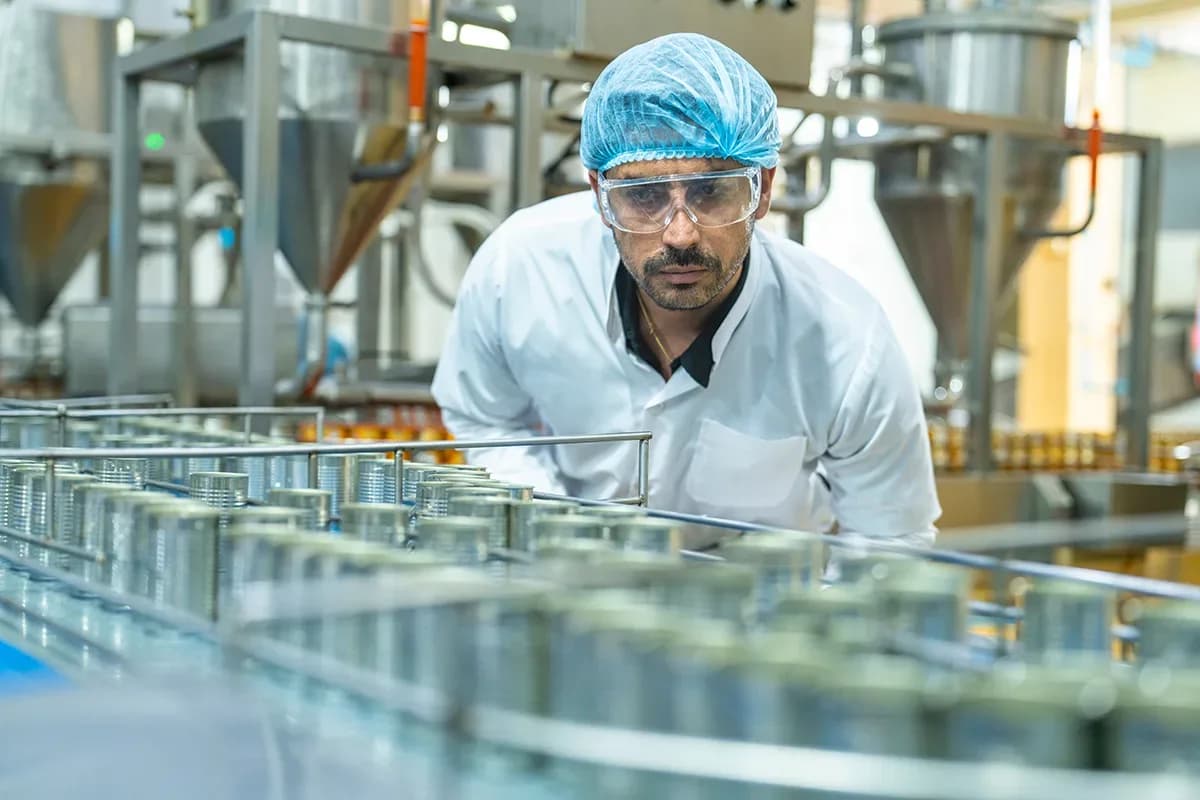
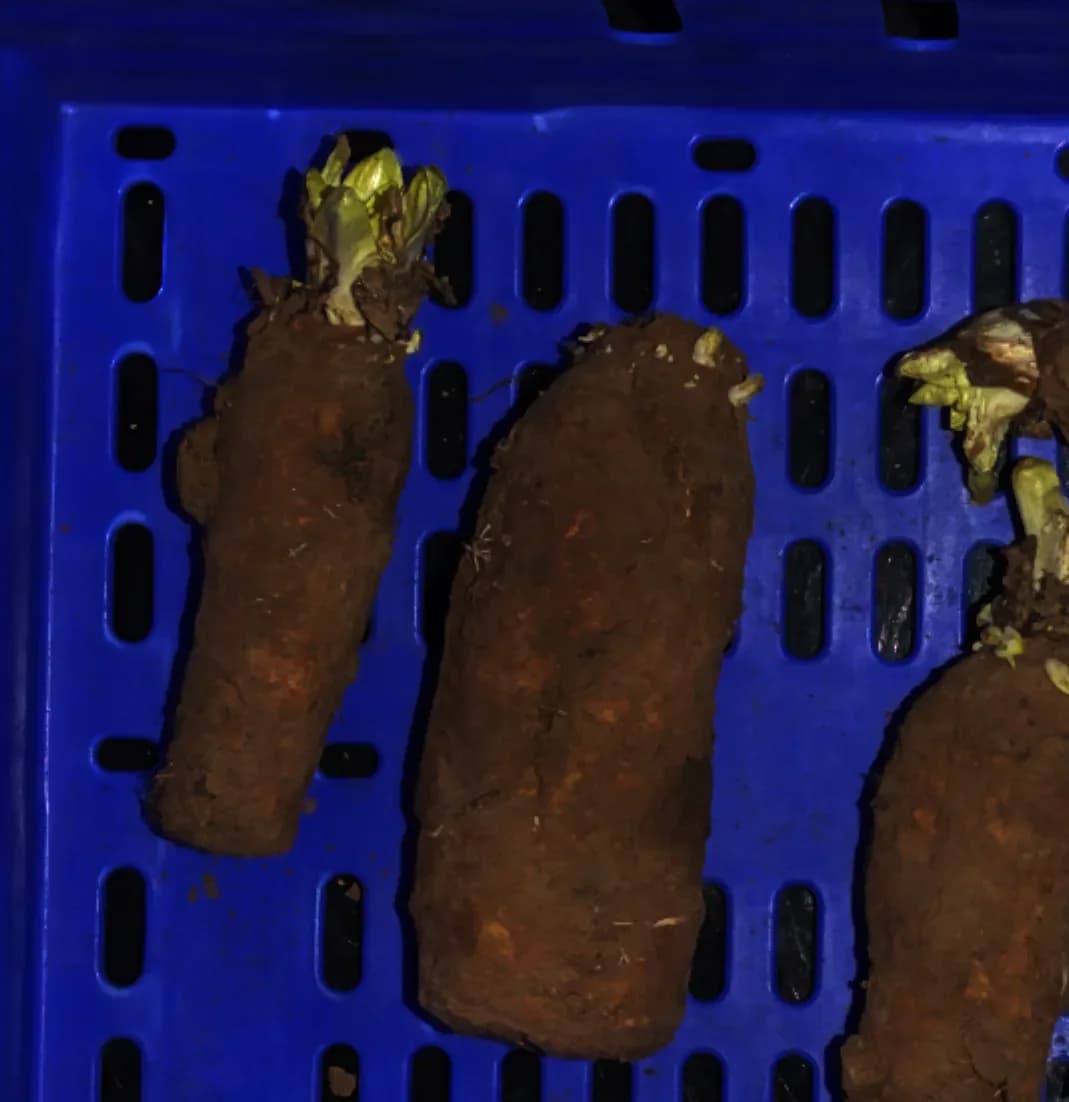
Fibers, plastic shards, pieces of gaskets, insects: things that metal detectors miss, and that trigger a recall if they leave the factory.
A crease under the lid, product trapped in the seam, off-center sealing: the causes of leaks can be seen in the image before they are detected during a leak test.
Missing, misaligned, illegible, or expired labels: a single misplaced label can contaminate an entire pallet before anyone notices.
Missing, crooked, peeling labels or labels from another recipe: the leading cause of recalls in the food industry is not microbiological; it is labeling-related.
Level outside the tolerance range, crooked cap, improperly sealed cap, deformed container: defects that result in more customer complaints than safety issues.
Several hundred products per minute, format changes throughout the day, and a high-pressure-washed production area: these are the real challenges of the job.
On the line
A quality control station in the food industry is not simply a laboratory workstation moved to the production line. The enclosures, optics, and lighting are selected to withstand high-pressure cleaning and disinfectants, and to remain legible whether covered in condensation or frost.
The rest follows the same logic: a setup that keeps the line accessible to operators, an ejection system that interfaces with your PLC, and a processing time based on your actual production rate rather than that of a demonstration.

Under the hood
Two production lines packaging the same product do not produce the same defects: the material, the settings, the speed, and tool wear determine what actually appears. A model trained on data from another location will therefore see something different from what comes out of your facility.
That’s why the learning process starts with your images, including your edge cases: the ones your operators discuss among themselves. And when a new defect appears, your teams take control of the model themselves, without having to go through a third-party provider.
use case
Psycle machine vision systems detect metal, plastic or bone fragments in real time on your food production lines, before they reach the consumer or damage your equipment.
Contact ususe case
Defective heat seals, misapplied lids, non-compliant caps: machine vision inspects 100% of food and pharmaceutical packaging to guarantee leak-tightness and regulatory compliance.
Contact ususe case
Pressure, deformation, fill level: machine vision detects leaks and sealing defects on food pouches at the end of the line, to reject non-compliant units before packaging and protect product traceability.
Learn moreMethod
.01
We start with your documents and images. The analysis determines what is detectable, at what frequency, and what is not.
.02
Optics, lighting, and the model are fixed in place on a test stand, along with your boundary conditions and washing constraints.
.03
In-line installation, PLC integration, ejection, and transmission of results to your quality management tools.
.04
New format, new defect, new recipe: You can update the model on your own, without us.
If a checkpoint is set up too early, it misses what happens next; if it's set up too late, it causes an already packaged product to be rejected.
| Where the camera is positioned | What the system decides | |
|---|---|---|
| Foreign body | After filling, before closing the container | Product ejection and an alert if the defect recurs |
| Sealing and capping | At the exit of a sealing or lid-sealing machine | Ejection and drift signal before the batch is lost |
| Date and lot number | Right after the marker | Ejection; suspension requested if illegibility becomes systematic |
| Labeling and allergens | After the labeling machine | Compare with the current recipe, then eject |
| Filling and capping | After the dosing and capping machine | Rejection of products outside tolerance limits |
| Product appearance | On a conveyor belt, before packaging | Sorting or downgrading rather than discarding |
The intelligence Psycle brings is essential for obtaining a reliable result.
Julien Guinoiseau – Director
Aretec (groupe SOGAT)

They didn't hesitate to add features to their software to meet our needs.
Thibault Lonpret – Robotics and Automation Project Manager
Intercarat

Psycle is an ideal partner for developing advanced machine vision functions.
Sébastien Le Jariel – Head of Pre-Project Engineering
Himber Technologies (groupe SMB)

The partnership with Psycle opens up very interesting new possibilities for automating food processes.
Estelle Le Pape – President
MCA Process

Psycle's AI lets us choose what we want to detect, and detect it without false positives.
Patrice Ferrero – Continuous Improvement Manager
Massilly

Technature secures the quality control of its products and packaging with machine vision
Mathis Le Floch – Industrialization Engineering Intern
Technature

Psycle's AI gives us immediate responsiveness in detecting defects. The interface is easy to use and allows instant data analysis.
Adeline Bazin – Site Director
Babynov
Their SDK and all their tools are well designed, well documented and ready to use. All of this is backed by outstanding technical support.
Dr Russell Sion – CEO
Jenton Dimaco
Anything that is not metallic but remains visible: fiber, plastic shard, piece of gasket, insect. The camera is placed after filling, before the container is closed, and the affected product is ejected; an alert is raised if the defect recurs. Vision therefore complements the metal detector rather than replacing it, and what is detectable on your products is confirmed during the feasibility study.
Yes. A crease under the lidding film, product caught in the seal or an off-center lid can be seen in the image, before showing up in a leak test. Every tray or pouch is inspected at line speed, rather than just a sample.
Yes. The system spots a mention that is missing, offset, illegible or incorrect, as well as a label that is missing, skewed, peeling or belonging to another recipe. This is a key point for allergens: the leading cause of recalls in the food industry is labeling, not microbiological. A drifting coder is flagged from the very first products, not after an entire pallet.
Yes, that is a starting requirement. The housings, optics and lighting are chosen for jet cleaning (IP69K rating) and disinfectants, and to keep a usable image under condensation as well as frost. The mounting leaves the line accessible to operators.
The processing time is matched to your actual line speed, which can reach several hundred products per minute. Format or recipe changes during the day are planned for from the prototype stage. When a new format arrives, your teams update the model themselves, without going back to a service provider.
The location depends on the defect you are looking for. Placed too early, the station misses what happens afterwards; placed too late, it rejects a product that has already been packaged.
Ejection is linked to your PLC.
psycle solutions
a Python framework compatible with computer vision standards (GenICam) and the latest deep learning models.